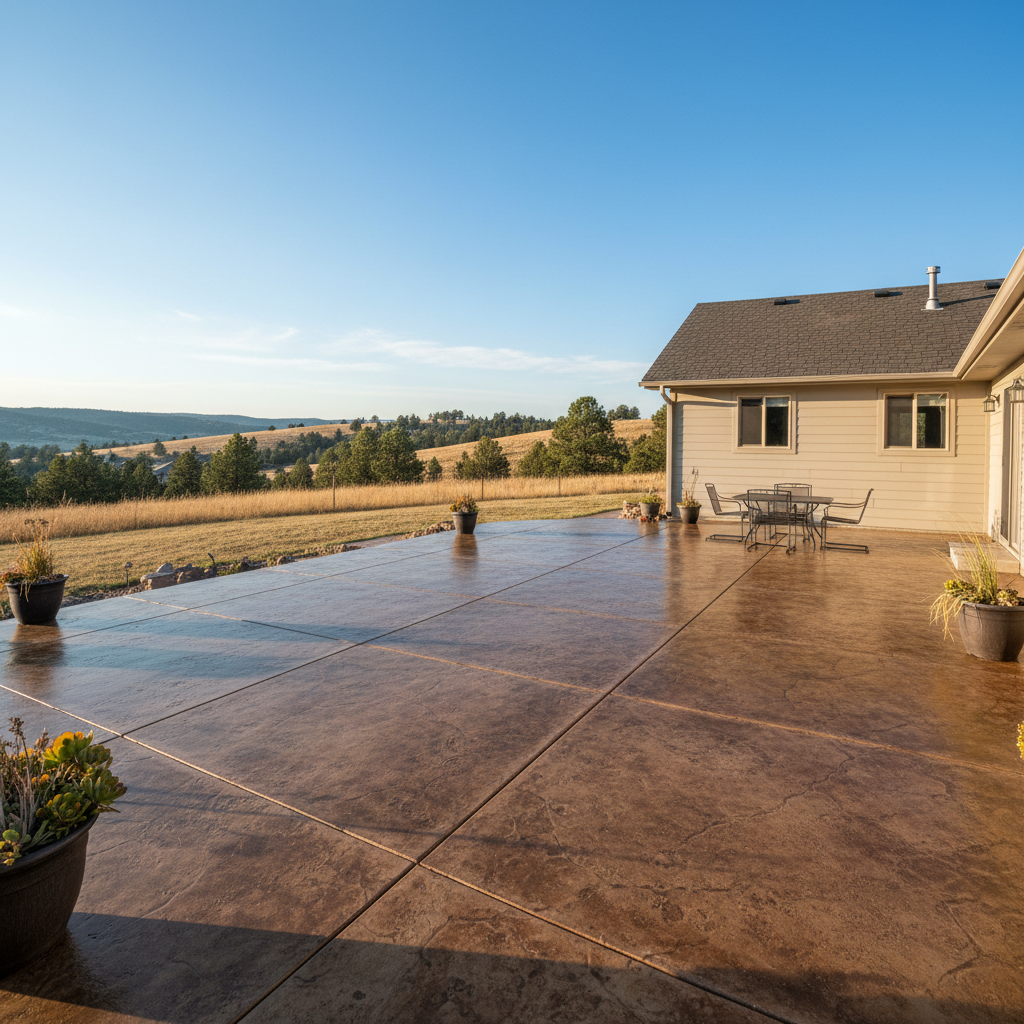
Extend the Life of Your Stained Concrete
You've invested in stained concrete, whether it's for your patio, driveway, or basement floor. It looks fantastic, right? But it's not a 'install it and forget it' kind of deal, especially with the wild temperature swings we see here in Piedmont. You'll want to take a few steps to make sure that beautiful color and finish last.
The biggest thing you can do to extend the life of your stained concrete is proper sealing. When we stain concrete, we always apply a high-quality sealer. That sealer is your first line of defense against everything from UV rays to spills to our harsh winters. Think of it like sunscreen for your concrete. Over time, that sealer wears down, especially in high-traffic areas or spots exposed to a lot of sun and snow. I usually recommend re-sealing every 2-5 years, depending on the traffic and exposure. If it's an outdoor patio that gets hammered by the sun all summer and then buried in snow all winter, you'll lean closer to that 2-year mark. Indoor floors might stretch to 5 years or even more if they're not getting a ton of abuse.
Another big one is protecting it from heavy impacts and dragging heavy objects. Stained concrete is tough, but it's not indestructible. Dropping a sledgehammer on it or dragging a metal grill across it without protection can scratch or chip the surface, and once that sealer is compromised, the stain underneath can be more vulnerable.
Regular Maintenance: What You Need to Do
Keeping your stained concrete looking good isn't rocket science, but it does require a little attention. For indoor stained floors, regular sweeping and damp mopping with a mild, pH-neutral cleaner is usually all you need. Stay away from harsh chemicals, ammonia, or anything abrasive; those can strip the sealer and dull the finish.
For outdoor stained concrete, like a patio or walkway, you've got a bit more to contend with. We get a lot of dust and dirt blowing around here, especially if you're out in the more rural parts of Piedmont near the foothills. A good sweep or a quick hose-down regularly will prevent dirt from building up and grinding into the surface. If you need to clean it more thoroughly, a pressure washer on a low setting (no more than 1200-1500 PSI) with a fan tip can work wonders, but be careful not to hold it too close or blast away the sealer. Again, a mild detergent is fine for tougher spots. Just make sure to rinse it really well afterwards.
Spills happen. If you spill oil, grease, or anything acidic (like lemon juice or wine), clean it up as quickly as possible. The longer it sits, the more likely it is to penetrate the sealer and potentially affect the stain.
Warning Signs of Problems
How do you know if your stained concrete needs more than just a routine cleaning or if it's time for a re-seal? Keep an eye out for these signs:
- Dullness or Fading: If your vibrant color starts looking muted or patchy, especially in high-traffic areas or spots exposed to a lot of sun, your sealer is likely wearing thin.
- Water Penetration: When you hose down your outdoor concrete, does the water bead up nicely, or does it soak in and darken the surface? If it soaks in, the sealer isn't doing its job anymore.
- Chips, Cracks, or Scratches: Small surface scratches might just be in the sealer, but deeper chips or cracks can expose the unstained concrete underneath.
- Peeling or Flaking: This isn't super common with quality stains and sealers, but if you see the surface actually peeling, it's a sign of a sealer adhesion issue or a product failure.
When to Call a Professional
Most minor cleaning and re-sealing jobs you can handle yourself if you're comfortable with it. There are plenty of good sealers available at hardware stores. But there are times when it's definitely best to call in the pros, like us at Primetime Concrete Co.
- Extensive Fading or Discoloration: If the stain itself seems to be failing, not just the sealer, that's a bigger fix. Re-staining can be tricky to match existing colors.
- Deep Cracks or Spalling: If you've got structural cracks or the concrete surface is flaking off (spalling), that's a concrete repair issue that goes beyond just the stain and sealer. This can happen sometimes with our freeze-thaw cycles if the original concrete wasn't poured right.
- Sealer Failure (Peeling/Cloudiness): If a sealer was applied improperly and is now peeling or turning cloudy, you might need professional stripping and re-application. It's a messy job.
- You're Just Not Sure: Honestly, if you look at it and you're thinking,